Hardwood Floor Sanding and Refinishing in South Bend, IN
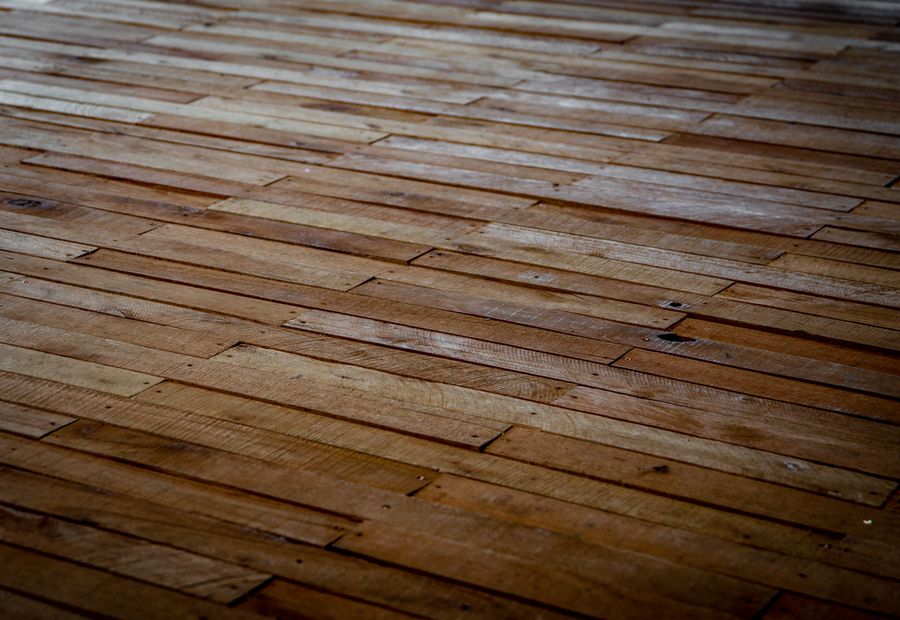
Sanding takes a floor back to bare wood and a fresh finish seals it for another decade or more. It is the right job when the finish has genuinely failed rather than simply worn dull, and it is the more expensive of the two options, so it is worth being sure which one you need.
Sanding or Recoating
The test is whether the damage is in the finish or in the wood. Run a fingernail across the worst wear path. If it catches on bare wood, or there is grey or black staining, or there are deep gouges, the floor needs sanding. If the surface is dull and lightly scratched but still sealed, a screen and recoat does the job for about half the price and removes no wood.
We tell you which one you have at the estimate. There is no point paying for a sanding on a floor that only needs a coat, and there is no point paying for a coat that will peel off a floor that needed sanding.
What Is Actually in These Houses
South Bend's residential core filled in through the Studebaker decades, roughly 1900 to 1950, when the plants were running and the neighborhoods around them grew fast. Red oak was the standard floor in that construction, not an upgrade, which is why so much of it is still there under the carpet.
White oak turns up in some of the better houses and maple occasionally. Maple is the one to flag before work starts, because it is dense and closed-grain and it blotches badly under stain unless it is conditioned or water-popped first.
The Process
On-site inspection first: species, remaining thickness above the tongue, moisture readings in both the floor and the subfloor, and any damage. You get a written scope and price. On the day we move furniture, seal doorways and protect baseboards. Sanding runs coarse to fine over a day for most floors. Stain, if you want it, goes on the next day after you approve a test patch on your own boards. Then two to three coats of polyurethane. Socks on it within 24 hours of the last coat.
Finish Choice
Oil-based polyurethane is durable, adds amber warmth and costs less per coat, but needs 24 hours between coats. Water-based dries in four to six hours, stays clear rather than yellowing, and has much lower odour. For a rental turnaround the faster schedule usually decides it. For an owner-occupied house with time to spare, either works.
What It Costs
Basic sand and refinish runs $3 to $6 per square foot. A 250 square foot room is $750 to $1,500; a 1,200 square foot house $3,600 to $7,200. Custom stain adds $1 to $3 per square foot. Free written estimate first.
How do I know I need a full sanding rather than a recoat?
If the finish is worn through to bare wood anywhere, if there is grey or black staining in the grain, if there are deep gouges, or if the floor has been waxed, a recoat will not hold and you need a full sand. If the surface is just dull and lightly scratched, save your money and recoat.
How long does it take?
Two to three days for most houses: a day to sand, a day for stain if you want it, a day for finish coats. Water-based polyurethane recoats in four to six hours against 24 for oil-based, so the finish you pick affects the timeline more than the square footage does.
How many times can this floor be sanded?
Three to five across its life, depending on original thickness and what previous owners already took. In housing this age a good share is often already spent. We measure what is left above the tongue before committing and will recommend a recoat instead if it is thin.
What is under the carpet likely to be?
In the pre-1950 stock, red oak most of the time, sometimes white oak, occasionally maple. It was laid as standard rather than as an upgrade in these houses, so it is usually there and usually worth recovering.
Can you match a new section to an existing floor?
Yes, but be realistic about it. We match species, width and grain direction and mix stain on site with test patches, and it gets close. A patch in the middle of an old floor never disappears entirely unless the whole connected run is refinished together.