Stair Refinishing in South Bend, IN
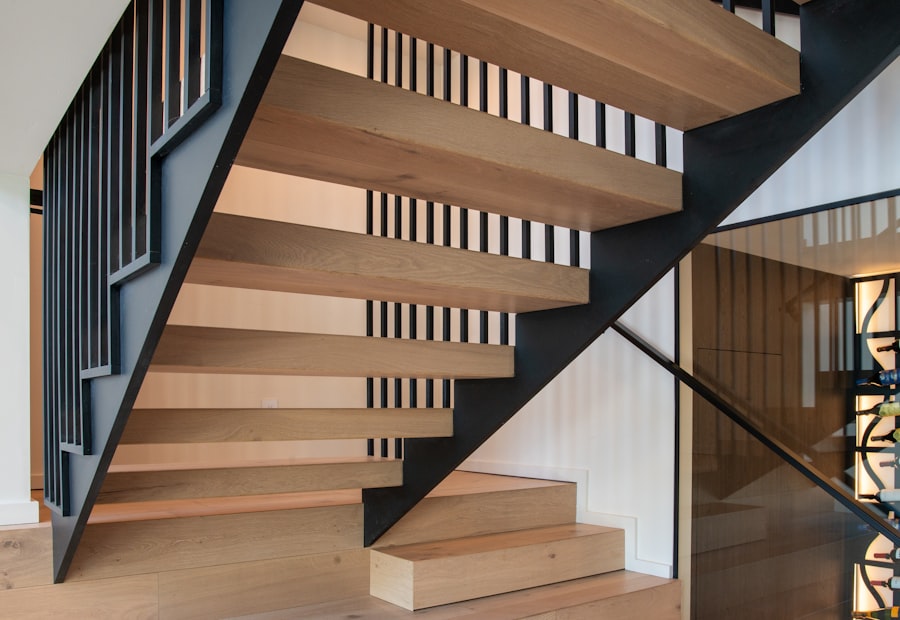
Stairs take more wear per square foot than anything else in a house, and in a rental they take it from more people. They are also the first thing anyone sees at a viewing, which makes them worth more attention than their square footage suggests.
What Gets Refinished
Treads
The horizontal surface, where the wear concentrates, particularly on the nosing at the front edge. That nosing is always the first part of a staircase to go through to bare wood.
Risers
The vertical face. Frequently painted in this housing, and stained treads over painted risers is often the original scheme rather than a modern choice.
Handrails and newel posts
Hand-sanded and finished to match the treads.
Balusters
Done one at a time. On a turned-baluster staircase this is the single biggest driver of cost.
Carpet Removal
Most stair work here starts with pulling carpet that went down over original oak in the mid-century decades. The wood underneath is usually in good condition because the carpet protected it from light and traffic. Tack strips and staples leave holes across the treads and around the edges, and those fill and vanish under the refinish.
Access During Work
We work top-down so there is always a way up and down. Where a staircase is the only access to the bedrooms we phase it across days rather than closing it. In a multi-unit building we schedule around the other tenants' access rather than assuming the building is empty.
What It Costs
$25 to $85 per step depending on condition and detail. A typical 13-step staircase with treads, risers and a handrail runs roughly $600 to $1,400. Carpet removal, staple pulling and nosing repair are quoted as separate lines.
Why per step rather than per square foot?
Because almost none of it is machine work. Each tread is hand-sanded, the nosing shaped by hand, risers and stringers cut in individually, balusters done one at a time. A staircase is a fraction of a room's area and several times its labor.
Can you take carpet off the stairs?
Yes, and it is the most common stair job here. Carpet went over original oak stairs across this housing stock mid-century. Underneath is usually in good shape because it was protected. Staple and tack holes fill and disappear.
Can tenants use the stairs during the work?
We work top-down so there is always a route. Where it is the only staircase we phase it across days rather than closing it. In a multi-unit building we schedule around access for the other units.
The nosing is worn through. Replace or refinish?
Refinish, if there is enough wood left to reshape. The nosing takes the most concentrated wear in the whole house so it always goes first. Treads that are cracked or unsafe get replaced individually.
Do stairs have to match the floors?
No, and in these houses stained treads with painted risers is often the original look rather than a compromise. If you do want a match we take the formula from your floor and test on a hidden riser first.